
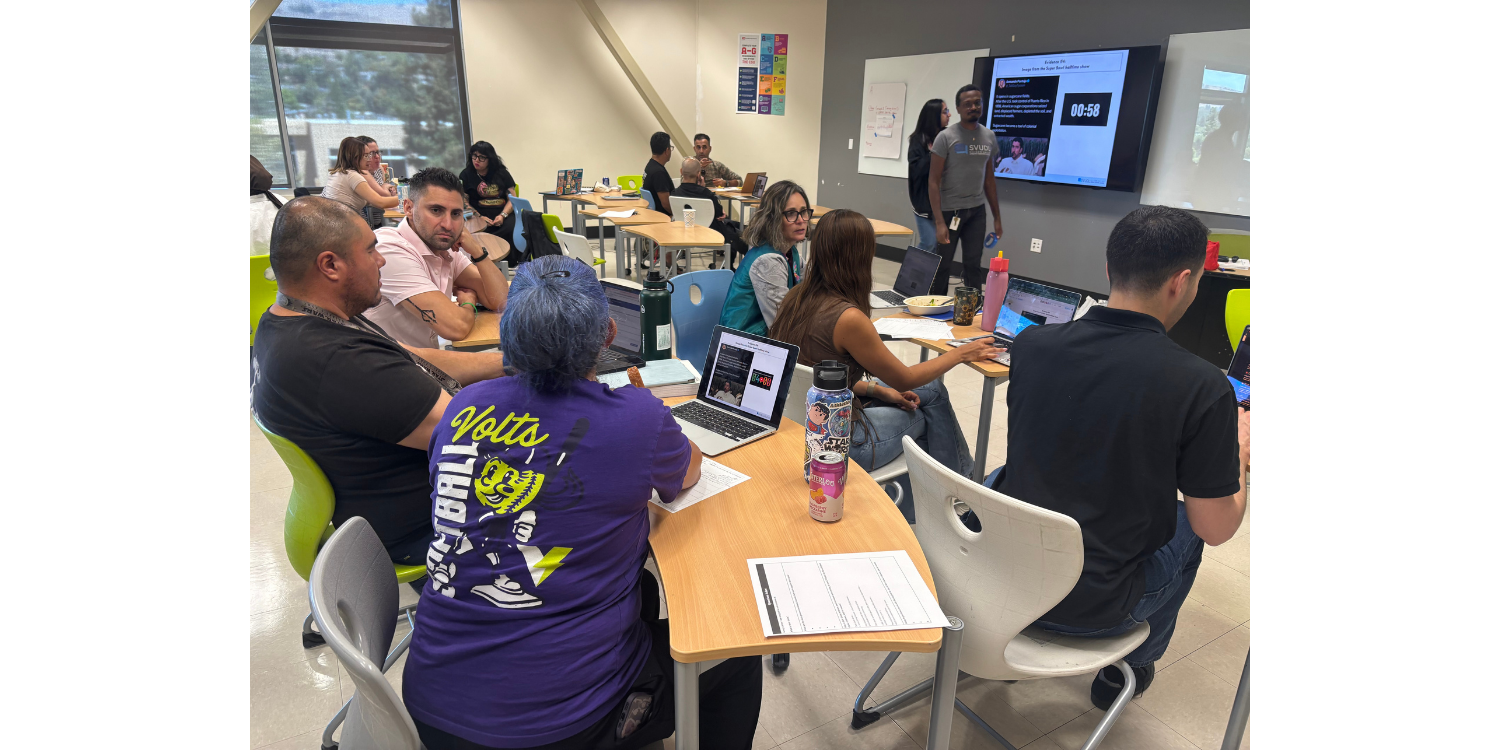
SVUDL and The Foundation for Hispanic Education (TFHE) are taking a longstanding partnership to an exciting new level. Through a three-year initiative spanning TFHE’s three San Jose high schools, 49 educators will build the tools, confidence, and community to bring Debate Centered Instruction into classrooms serving more than 900 students—while helping SVUDL learn more than ever before about what happens when debate becomes part of the school day.
What happens when the power of debate is no longer reserved for students who join an afterschool team?
That question is at the heart of a bold new partnership between the Silicon Valley Urban Debate League (SVUDL) and The Foundation for Hispanic Education (TFHE). Since 2021, SVUDL and TFHE have worked together to expand Speech and Debate opportunities, from afterschool competition to UC-approved A-G electives and classroom-based Debate Centered Instruction. Students from TFHE have competed at the highest levels—including three trips by Latino College Preparatory Academy students to the prestigious Tournament of Champions at the University of Kentucky.
Now the partnership is growing from successful programs and individual classrooms into something much bigger: a three-year effort to make Debate Centered Instruction a durable part of teaching and learning across TFHE’s three high schools, Latino College Preparatory Academy, Luis Valdez Leadership Academy, and the Roberto Cruz Leadership Academy.
Debate Centered Instruction, or DCI, takes the intellectual core of Speech and Debate and brings it into the everyday classroom. It is not a separate curriculum, and it does not require every single class period to stage a formal debate. Instead, DCI gives teachers structures that ask students to build arguments, evaluate evidence and reasoning, ask probing questions, respond to competing ideas, and explain why they think what they think. The goal is a classroom in which students are not simply waiting for the teacher to provide the “right answer,” but actively making meaning together.
That philosophy grows directly from SVUDL’s mission to develop young people’s voices and critical-thinking skills. And it dramatically expands who gets access. Since 2022, SVUDL has provided DCI professional development to 321 unique teachers. During the 2025–2026 school year, SVUDL reached 2,757 unique students via its DCI programming. The TFHE partnership represents the next step: moving from individual teachers and programs toward a whole-network model that can reach students throughout the school day.
The first glimpse of that future came on August 4, when the first TFHE teacher cohort gathered for a full day of professional learning. Teachers did not spend the day listening to lectures about student engagement—they experienced DCI as learners. They debated the NBA “GOAT” using mathematical evidence, sorted evidence around Bad Bunny and the Super Bowl, and explored causes of global warming through Four Corners.
Their responses captured both the energy of the day and the practicality of the approach.
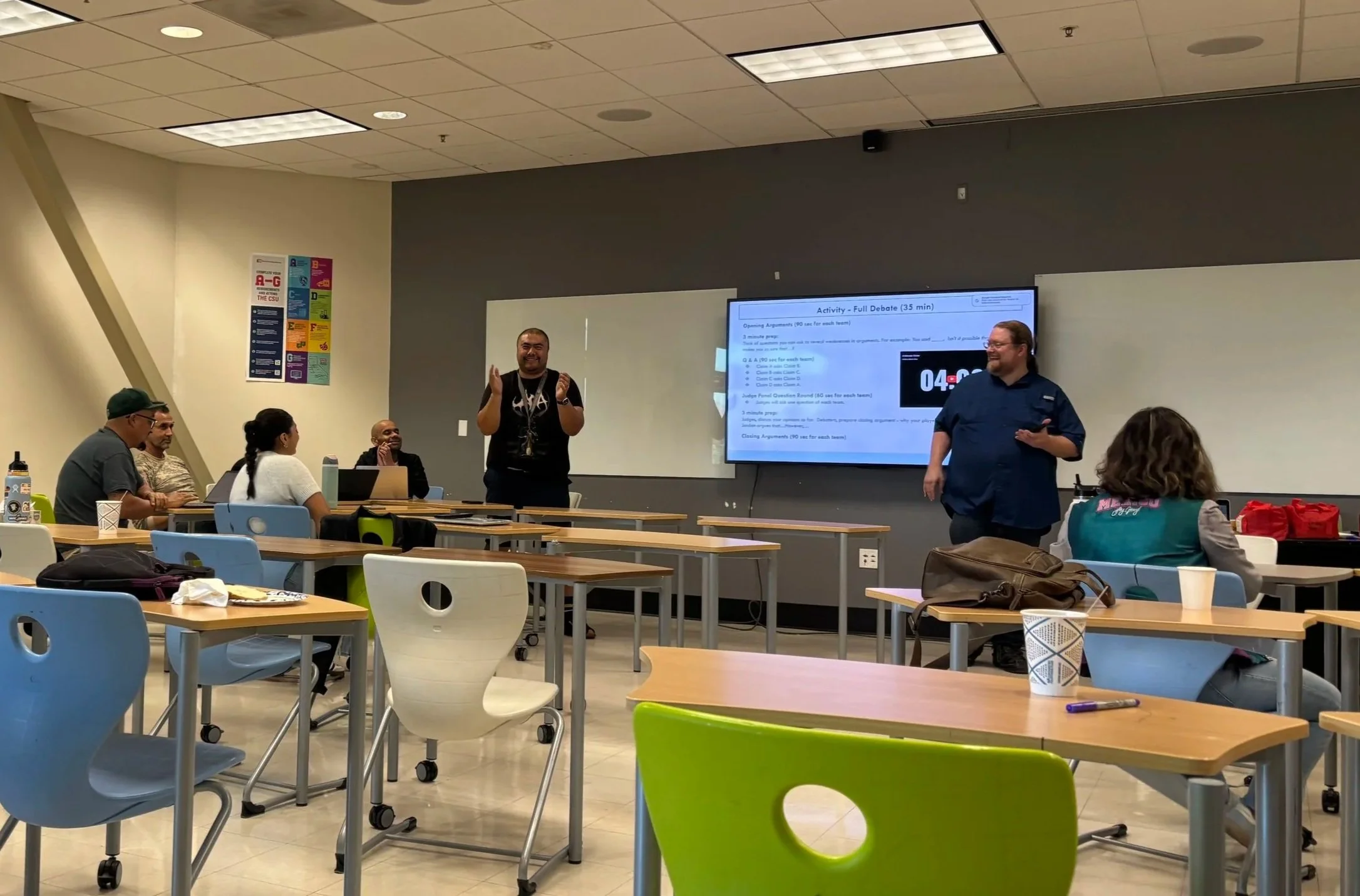
Teachers debating the NBA “GOAT”
“I like how the activities were already built so that we could try them out for ourselves as if we were the students. It wasn't just data being thrown at us with the expectation that we would make time to create something from scratch,” one teacher shared.
Another shared, “I really loved the full class debate activity. I am looking forward to incorporating this into not only my science classes but also my Advisory class.”
And one educator summed up DCI’s flexibility simply: “All activities can be applied in my classroom.”
That enthusiasm was accompanied by an encouraging level of implementation readiness. Of the 23 teachers who completed an exit ticket, 16—nearly 70 percent—said they felt Confident, Very confident, or Extremely confident about implementing Debate Centered Activities after the workshop.
And August 4 was only the beginning.
Over three years, TFHE teachers will participate in intensive DCI workshops, planning and debrief cycles, Communities of Practice, classroom observations and feedback, individual consultation, and shared resource development. Teachers will practice DCI, bring it into their own content areas, study what happens, and learn from one another. Just as importantly, SVUDL will work with TFHE to build internal teacher and administrator capacity so the work can continue with decreasing outside support.
The partnership will also help answer a larger question: what can we learn when DCI is implemented deeply, intentionally, and at scale?
Working with Dr. Beth Schueler, Associate Professor of Education at Stanford University, SVUDL and TFHE are planning a pilot study in which teachers are randomly assigned to two cohorts. Cohort A receives DCI professional development first, while Cohort B serves as a comparison group before receiving the same opportunity the following year. Researchers will examine teacher confidence and practice, student experiences, implementation of DCI, and available indicators of engagement and academic performance.
The study is deliberately a first step, not a final verdict. Its modest sample size means researchers will be cautious about broad conclusions. But it can help SVUDL refine measurement tools, understand the potential magnitude of DCI’s effects, identify questions for future study, and strengthen the foundation for larger-scale research.
That makes this partnership important far beyond the three schools. SVUDL was founded on a belief that Speech and Debate can change educational and professional trajectories. DCI asks an equally ambitious question: what if the skills students build through afterschool Speech and Debate—finding their voice, using evidence, thinking critically, and engaging opposing ideas—could become part of how students learn throughout the school day?
Over the next three years, more than 900 TFHE students will be part of the answer. In classrooms across San Jose, they will have more opportunities to make claims, challenge ideas, listen carefully, use evidence, change their minds, and discover that their voices belong in serious academic conversations.
For SVUDL and TFHE, that is something worth celebrating—and only the beginning.