
Igniting Minds, Amplifying Voices: East Side Union High School Teachers Reimagine Learning through Debate
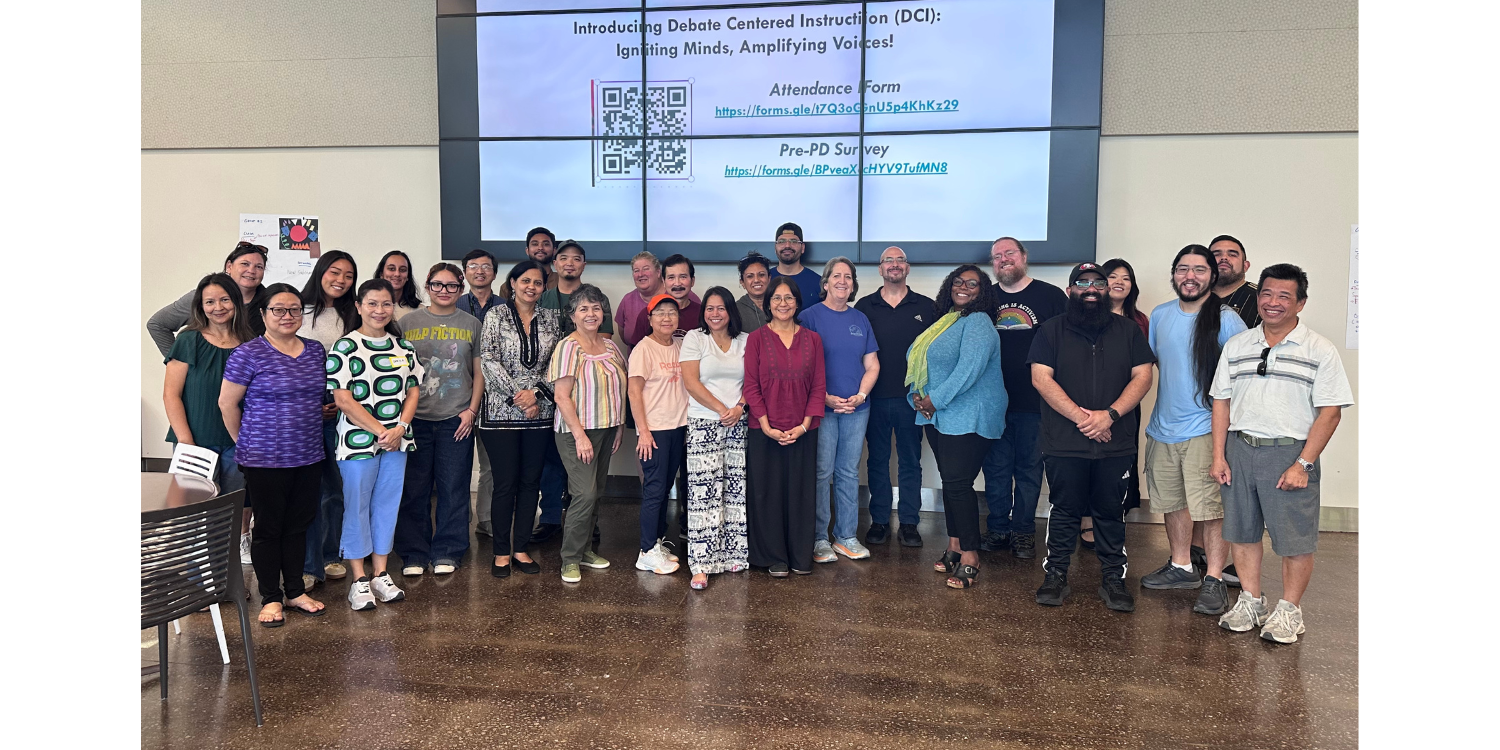
Earlier this month, thirty-five teachers from across the East Side Union High School District gathered at Yerba Buena High School for two days that turned professional development into lively, engaging learning. Hosted by the Silicon Valley Urban Debate League (SVUDL), the two-day workshop — Igniting Minds, Amplifying Voices — immersed participants in Debate Centered Instruction (DCI), an approach that transforms ordinary lessons into spaces for argumentation, reasoning, and authentic student voice.
Many teachers arrived unsure what debate might look like outside a traditional speech class, but they left with a renewed sense of possibility. One participant captured the mood succinctly: debate, they said, “brings opportunities for critical thinking and further engagement in the classroom.”
Day One: Arguing Grammar and Greatness
The first day plunged teachers straight into the experience of being students again. In a spirited Language Arts activity titled What Part of Speech is the Best?, groups championed nouns, verbs, prepositions, and other grammatical forms. Using a debate created by SVUDL’s sister league, the Boston Debate League teachers crafted claims, marshaled evidence, and delivered closing arguments while other attendees acted as judges. A DCI Fellow from Independence High School, Gretchen Larese, led the session in front of fellow teachers, and this had a deep impact on attendees.
Several teachers remarked that completing the debate themselves “showed me a formulated way of talking about a subject and combined fact-based arguments, logical progressions, and a competitive spirit.” Another appreciated “the focus on using evidence to support arguments instead of allowing outside evidence to overflow the main argument,” noting how clearly the exercise modeled the Claim-Evidence-Reasoning (CER) framework central to Common Core standards.
For some, the design of the lesson was as enlightening as its content. “Role assignments definitely pushed everyone to be involved and engaged,” one teacher wrote, while another pointed out that “the entire structure of the full-class debate can be adapted in my class — the clear group roles ensure individual accountability.”
The afternoon brought a dramatic change in tone and subject. The Math GOAT Debate asked, Who is the greatest baseball player of all time? Teachers drew on batting averages and fielding percentages to argue for legends such as Babe Ruth and Willie Mays. The exercise made data come alive; as one teacher wrote, it demonstrated “ways to support a claim with statistically relevant evidence.”
By day’s end, participants agreed that seeing debate modeled was invaluable. “I really enjoyed seeing a debate simulation to see how I can model this for my own students,” one teacher reflected. Another noted it clarified “how to make debate work for everyone and ensure that all groups have experts in the content area.”The consensus: structure and play can coexist — and when they do, student engagement follows.
Day Two: Scaffolding the Skills of Argument
If the first day captured the energy of a full-class debate, the second day turned to the scaffolds that make such engagement possible. Teachers rotated through shorter activities that build specific skills: questioning, reasoning, and collaborative evidence use.
In Pass the Paper, each participant contributed one element — a claim, a piece of evidence, reasoning, or revision — to a circulating argument on a question often encountered in a Social Sciences class: Was the United States justified in dropping nuclear bombs on Hiroshima and Nagasaki? The process, one teacher observed, focused on “keeping students engaged and participating at all times.”
The morning also featured a Class Challenge activity titled: What Is the Best Question?, a humanities-based exercise that trains students to move from factual to interpretive questioning. Teachers analyzed historical cartoons and worked together to write “thick” questions about perspective, bias, and context.
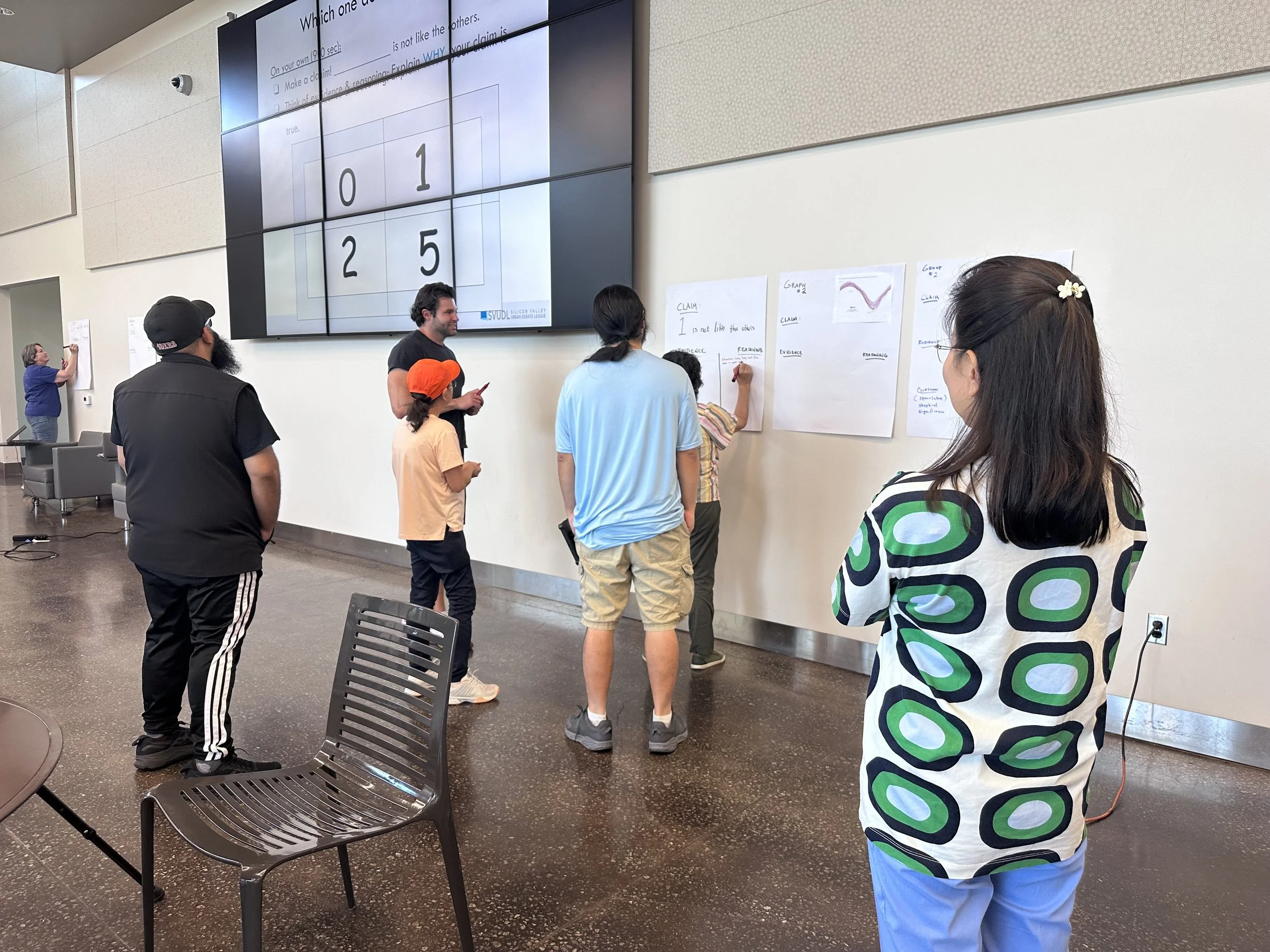
STEM teachers found particular value in the Four Corners and Carousel strategies examined in the afternoon, which merge movement, visuals, and technical vocabulary. One participant highlighted “how many different ways you can incorporate DCI strategies into engaging activities that also include STEM/Art characteristics,” while another appreciated that “the four-corner activity is less threatening for students and increases collaboration.”
Inclusivity emerged as a defining theme. Teachers discussed differentiating for diverse learners, remarking that DCI provided “learning techniques that allow all students with IEPs to interact with each other.”
From Practice to Reflection
After two days of hands-on learning, the exit reflections painted a consistent picture: teachers saw DCI as rigorous, adaptable, and immediately applicable.
The biggest takeaway? “That debate can be implemented in all subjects and in many different manners,” and, in particular, that “debate can be used in Math class!!!!” For many, the workshop reignited a passion for engagement. Teachers described finding “new ways and activities that would make my students more engaged.”
One extended reflection stitched these threads together as a participant asked themselves:
“How many more opportunities for pushing students to provide evidence and reasoning for their claims can I work into my class? I can see places where this would naturally support students with argumentative writing, push them towards critical thinking, and add a little extra to some of the things I’ve tried before where students didn’t seem as engaged.”
That sentiment — the realization that debate deepens thinking rather than distracts from it — captured the workshop’s purpose.
A Culture of Voice
By Friday afternoon, the Student Union was buzzing again — not with competition, but with conversation. Teachers compared notes on how they might adapt DCI for English Language Learners, lab-based science, or social studies simulations. Many were already planning to try the Parts of Speech debate or Four Corners activity in the coming weeks.
The PD ended with an invitation to join the 2025–2026 DCI Fellowship, which will provide deeper DCI coaching and classroom visits. Yet for many, the most valuable takeaway had already happened: they had experienced learning as their students should — through curiosity, evidence, and voice.