

Color of Justice: Imagining a Path to Justice
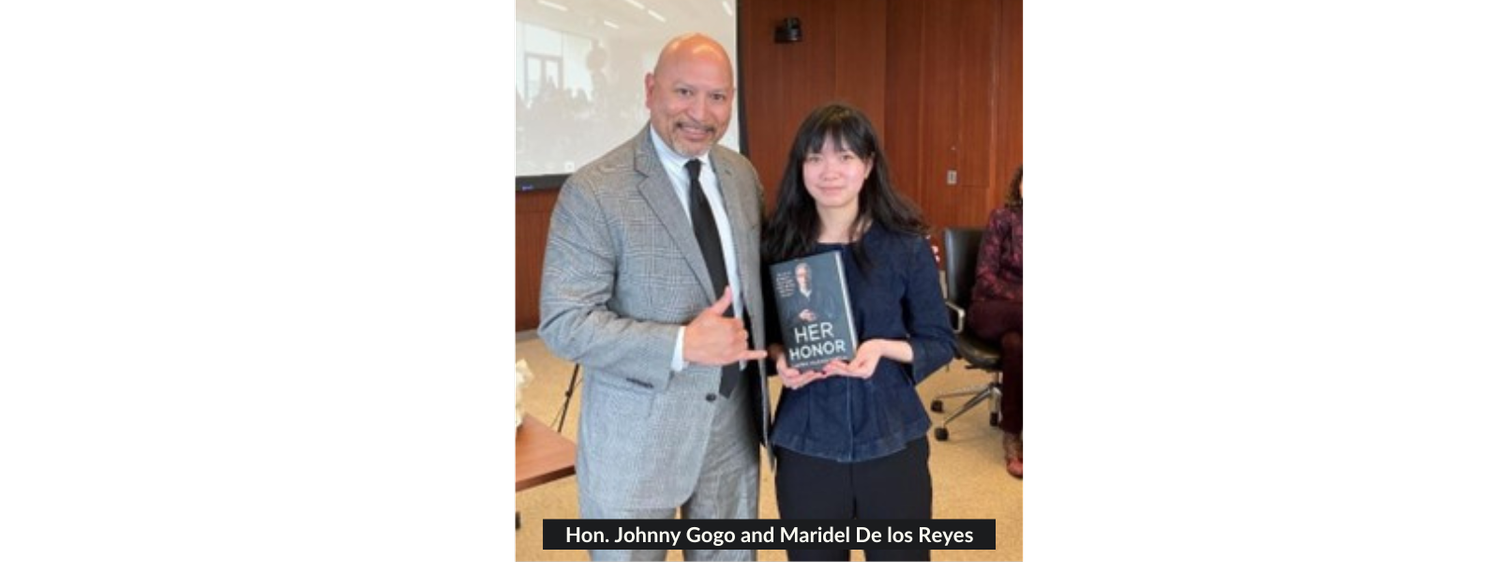
On Thursday, February 23, 2023, the Santa Clara County Superior Court Community Outreach Committee hosted the Superior Court’s third Color of Justice program. The Color of Justice Program is designed to promote diversity in the legal profession and in the justice system as a whole, and to provide students, who may or may not have previously envisioned a career in law, a greater understanding of the many pathways and opportunities available to them within the legal field.
Adapted from a press release from Santa Clara County Superior Court
On Thursday, February 23, 2023, the Santa Clara County Superior Court Community Outreach Committee hosted the Superior Court’s third Color of Justice program. The Color of Justice Program is designed to promote diversity in the legal profession and in the justice system as a whole, and to provide students, who may or may not have previously envisioned a career in law, a greater understanding of the many pathways and opportunities available to them within the legal field.
“Making sure the justice system mirrors the makeup of our society is one way we can build confidence in the idea that the system is not for or against any one group of people, but instead pursues justice for all,” said Hon. Julia Alloggiamento, Chair of the Court Community Outreach Committee and SVUDL Board member. “The Color of Justice event is designed to broaden the perspective of youth by exposing them to various professions such as judges, attorneys, social workers, probation officers, law enforcement, youth justice advocates and more. By hearing the heartfelt and real stories of panelists who worked their way into a position in the legal system despite significant life challenges, we hoped that students would be able to envision themselves in these roles that have the potential to improve outcomes for individuals, as well as increase trust and confidence in the administration of justice.”
Attendees included a wide range of students located throughout the County of Santa Clara, from eighth graders to high school students. As the host of the event and City of San Jose native, Hon. Julia Alloggiamento started the day by highlighting the changes in the makeup of individuals working in the justice system just during her lifetime, before moving the event into courtroom observations. Throughout the course of the event, intimate discussions among students and small group leaders who were hand selected based on their role within the County’s justice system were overheard, conveying commitments to achieve personal goals and brainstorming approaches to accomplish them. Two panel discussions were offered, the first focusing on the life paths of the panelists involved, followed by a panel promoting resources and programs available to youth. Panelists included Judges, members of the Public Defenders and the District Attorney’s Offices, the Probation Department, law enforcement, and numerous organizations dedicated to promoting student education and diversity in the legal profession (see below). The personal pathways to careers within the justice system presented by the panelists demonstrated to students that despite personal challenges and vulnerabilities, success in one’s endeavors is within reach.
Associate Justice Charles Edward Wilson, the Sixth District Court of Appeal remarked during his keynote speech, “We are very lucky in the State of California to have a very diverse population. Every race, national origin, and religious affiliation are represented in our communities. But when you look in our courtrooms and law offices, you wouldn’t necessarily know you were in the State of California. So when I see an audience like this, with so many diverse and wonderful students, I say to myself – ‘this is our opportunity to have more diversity in the room (justice system).’”
The Superior Court is grateful to all of the attendees, panelists, and organizations that helped make this event happen. Special thanks to Lincoln Law School, Pathways to Law, and the Silicon Valley Urban Debate League (SVUDL).
Chloe Truong, SVUDL co-captain and student at Independence High School in San Jose, reflected on the experience, sharing “This event really opened my eyes. I am so grateful to be introduced to different perspectives, especially because a career in law is always portrayed as this far-reaching dream. Listening to all the panelists made me realize how important representation is and how if I really want to pursue this career - I can.”

SVUDL Students Introduced to Voting Rights through Debate Centered Instruction
Andrew Hill High School’s Social Justice and Advocacy class had the opportunity to learn about the struggle for voting rights in California and across the nation from both a renowned activist and a famous journalist during a 2.5 week unit co-taught by English teacher Damien Quach and SVUDL’s own Director of Programming, Dr. Robert Burns from October 22-November 9. Read more!

Andrew Hill High School’s Social Justice and Advocacy class had the opportunity to learn about the struggle for voting rights in California and across the nation from both a renowned activist and a famous journalist during a 2.5 week unit co-taught by English teacher Damien Quach and SVUDL’s own Director of Programming, Dr. Robert Burns from October 22-November 9.
Students began the unit with an introduction to the struggle for voting rights and voter turnout in California from Jonathan Mehta Stein, the Executive Director of California Common Cause. Stein shared the historical advancements made in California to ensure automatic voter registration and universal vote by mail, but noted that voter turnout among people of color throughout the state continued to remain low when compared to total turnout. He shared that more must be done to mobilize immigrant communities where limited English is spoken, and outlined his own work advocating for ballots to be available in languages other than English. Students were very engaged when Stein recounted his own upbringing in an immigrant community in California and explained how his passion for justice led him to organize around lowering the cost of college for students during his time as a student at UC Berkeley.
After hearing from Stein and learning about the history of the struggle for voting rights in the civil rights movement, students examined arguments for and against Voter ID laws as presented by activists across the ideological spectrum from the National Review to the Brennan Center for Justice. They constructed cases for and against the institution of Voter IDs, focusing on three questions:
Is voter fraud a real threat to democracy or an excuse to limit the franchise?
Do voter ID laws place unnecessary obstacles in the way of a fundamental right or are they necessary to secure the integrity of the electoral process?
Do voter ID laws disproportionately affect the turnout of communities of color?
Forming teams of seven, students worked to construct a policy brief centered on one of the three controversial questions. At the end of the first half of the unit, students presented their arguments, cross-examined members of the other team, and offered rebuttal speeches during two hour-long debates.
In the second half of the unit, students examined arguments for and against a federal policy to ensure voting rights - the Freedom to Vote Act. This piece of legislation was proposed by Democrat Amy Klobuchar in the Senate and supported by President Joe Biden. Students examined arguments on both sides of the issue and created cases for and against the Freedom to Vote Act, focusing on three questions:
Do proposals such as automatic voter registration, vote by mail, and same day voting risk an increase in election fraud or are they necessary to ensure democratic participation?
Is it primarily the responsibility of the states or the federal government to regulate elections and ensure the right to vote?
Would the policies contained in the Freedom to Vote Act actually work? Would more Americans exercise the right to vote if the bill were passed?
Forming teams of seven, students again formulated and defended briefs on each question. They then presented their arguments in a second series of two hour-long debates. After one of the debates, Mr. Quach noted, "The kids enjoyed it and were engaged, there was laughter and they liked going up against each other." He confirmed that they also learned more than they would have in a lecture format. He concluded, "It was a win-win!" The experience was a testament to the way debate centered instruction can engage students and increase class participation by involving students in the process of formulating and presenting arguments.
On the final day of the unit, students had an opportunity to hear from Jessica Huseman, the editorial director of Votebeat, a nonprofit newsroom covering voting and elections. Jessica is a regular guest on CNN as a political analyst. She owns and operates The Friendly State News, a nonprofit training company for local newsrooms and freelancers. She is a graduate of Columbia University’s Graduate School of Journalism, and has taught journalism and public policy courses at Columbia University, NYU, and American University. Jessica discussed the role of local officials in the voting process, and made a convincing case to students that without a significant federal investment in the infrastructure of voting, the technology used to register voters and record ballots, the federal requirements in the Right to Vote Act would be difficult for local officials to implement.
Thank you to all of our guest speakers for empowering our students to delve deeper into the nuances of voter laws and policies!