
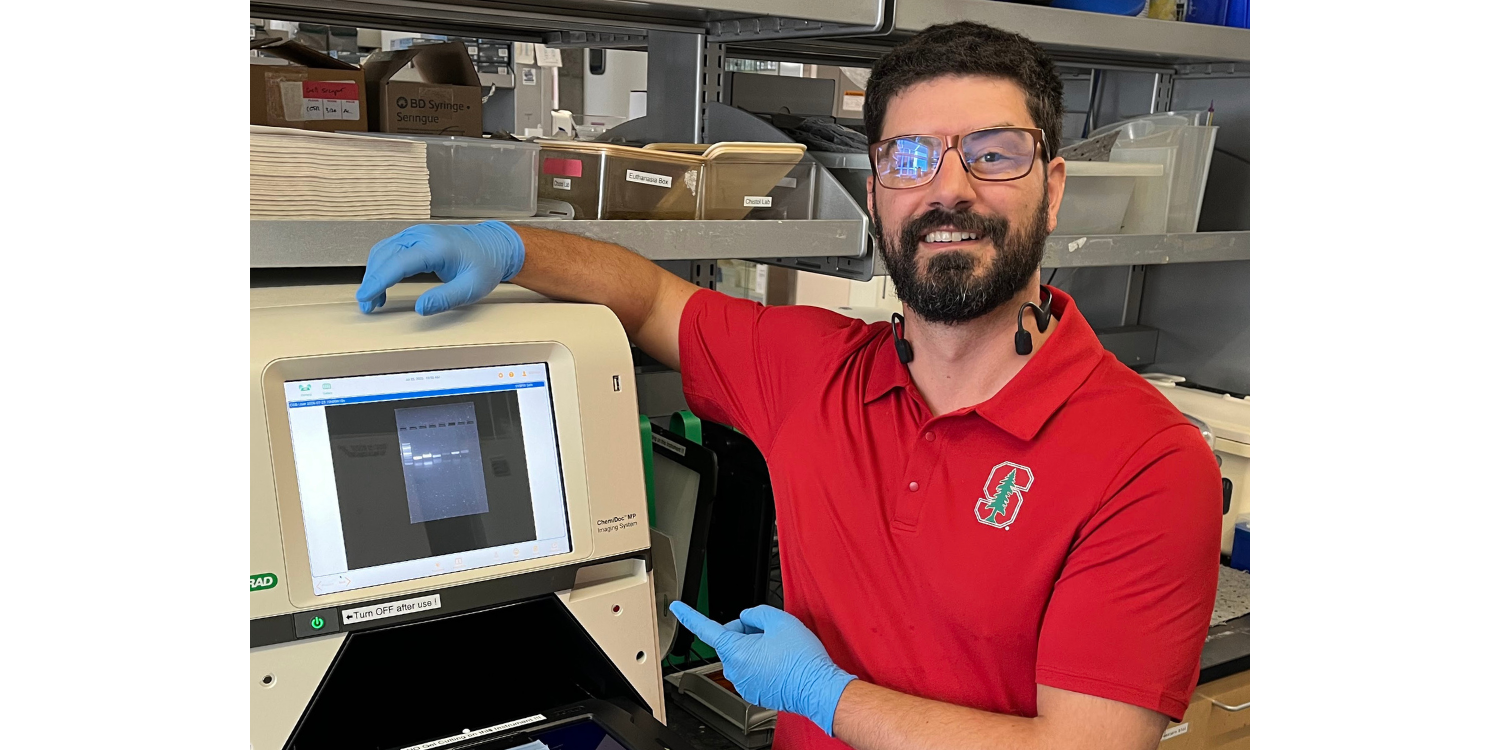
Dominic Rizzi teaches several Biotechnology courses at Oak Grove High School, his alma mater, where he is in his third year as Director of the Biotechnology Pathway and his 17th year in education. This year, he is extending debate beyond his classroom by launching an afterschool debate program. He is recruiting on campus and building a team that will meet after school to prepare for upcoming SVUDL competitions.
Dominic grew up in a family of Bay Area educators, but science set his direction. “Science was the topic I knew I’d want to teach because of my own experiences from high school and college. I had an opportunity to work in the Biotechnology field as an intern starting my junior year in high school, and it pushed my passion into the cutting edges of medical research and science. I am an alumnus of the high school I teach at and am passionate about giving back to my community and being a role model to my students,” he shared.
He first encountered Debate Centered Instruction (DCI) through SVUDL’s Director of Education, Dr. Robert Burns. Dominic had tried teaching debate techniques on his own but felt he lacked the experience to do it well. “Dr. Burns worked with me to develop lessons, access resources, and deliver debate-style activities that really pumped up my classroom,” he said.
The approach suits his Ethics in Science and Biotechnology course, where students take on current events, case studies, and historical events that shape health, medicine, research, and public policy. “Topics include genetic editing, nutrition, access to healthcare, stem cell research, GMOs, and more. These topics are ripe for debate as they sit on the edge of our current scientific abilities and practices,” he said. His students were already strong at spotting claims, evidence, and reasoning, and DCI builds on those skills while strengthening their communication.
In one lesson, small groups researched how Clustered Regularly Interspaced Short Palindromic Repeats (“CRISPR”) gene editing is being used around the world and built claims about potential “arms races” between nations. Some countries are restricting research, while others are advancing quickly, now with the help of AI. After initial research, students took part in spontaneous argumentation (“SPAR”) debates, evaluated each other’s arguments, cited their sources, and reached resolutions on CRISPR’s global impact.
The biggest challenge with integrating DCI into the classroom has been working with a mixed range of public speaking experience. “Some students excel at public speaking because of prior opportunities and experiences. With a mixed group of talent within the classroom, finding the right groups, models, and exemplars for students to follow has been challenging,” Dominic said. SVUDL’s DCI staff and coaches have helped fill the gap with abundant resources.
Students report that they feel more confident, can apply debate in science, are forming their own opinions, and can see how these skills carry into the workplace and life beyond school.
Dominic is a huge proponent of DCI, encouraging other teachers to follow his path, noting, “Do it! It is so fun to see your students’ talents blossom when given the opportunity and tools to express themselves. The support and resources available through SVUDL and DCI are generous and applicable to any subject area.”